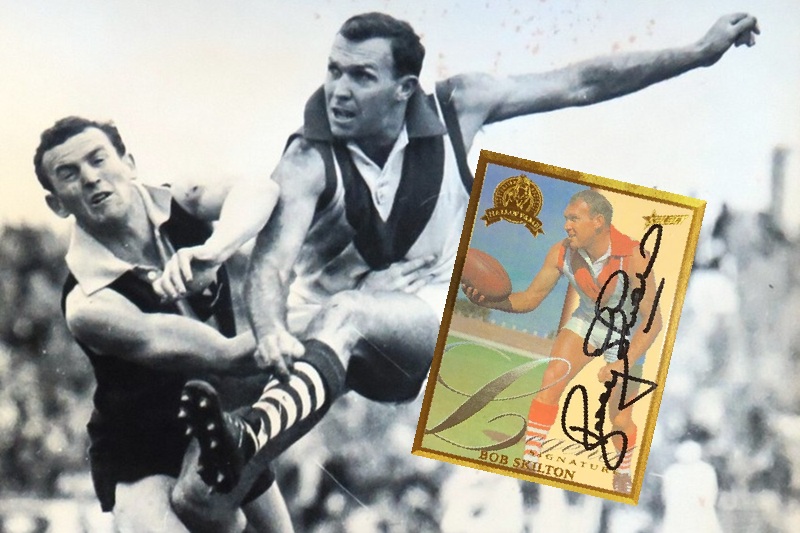
It’s exactly 70 years today that a boy called Bobby Skilton pulled on a Swans jumper for the first time. There’s a peculiar irony at the heart of Bob Skilton’s story. He didn’t even want to play for South Melbourne.
Growing up in Port Melbourne, Skilton (who lived in South Melbourne’s residential zone) applied for a clearance to Melbourne, the club he supported. He was refused. And so, somewhat reluctantly, he pulled on the red and white. What followed was one of the most decorated individual careers the game has ever seen, wrapped in the bittersweet package of a club that could never quite match its champion.
The Making of a Rover
When Skilton won his first Brownlow Medal in 1959, he was still just 20 years old – a plumbing apprentice attending night school while the count reached its climax. He was unaware the medal was his until he arrived home to find neighbours and well-wishers surrounding the family’s Port Melbourne house.
It was a fittingly unassuming beginning for a man who would become a giant of the game. He’d been a prodigy long before that night. A star of the 1953 Victorian Schoolboys’ team — where he kicked eight goals against Western Australia in a single match — Skilton went on to win the best and fairest for the South Melbourne under-17s before making his senior debut at just 17 years of age in round five, 1956.
Standing just 171 centimetres tall and nicknamed “The Chimp,” Skilton was never going to intimidate anyone on sight. But once the ball was in dispute, the picture changed entirely. He was a highly skilled, pre-eminently two-sided footballer in an era when that was still very much the exception to the rule. Roving to losing South Melbourne rucks for much of his career, he turned this disadvantage to his advantage by developing an unparalleled ability to anticipate the direction of the opposing ruckman’s taps.
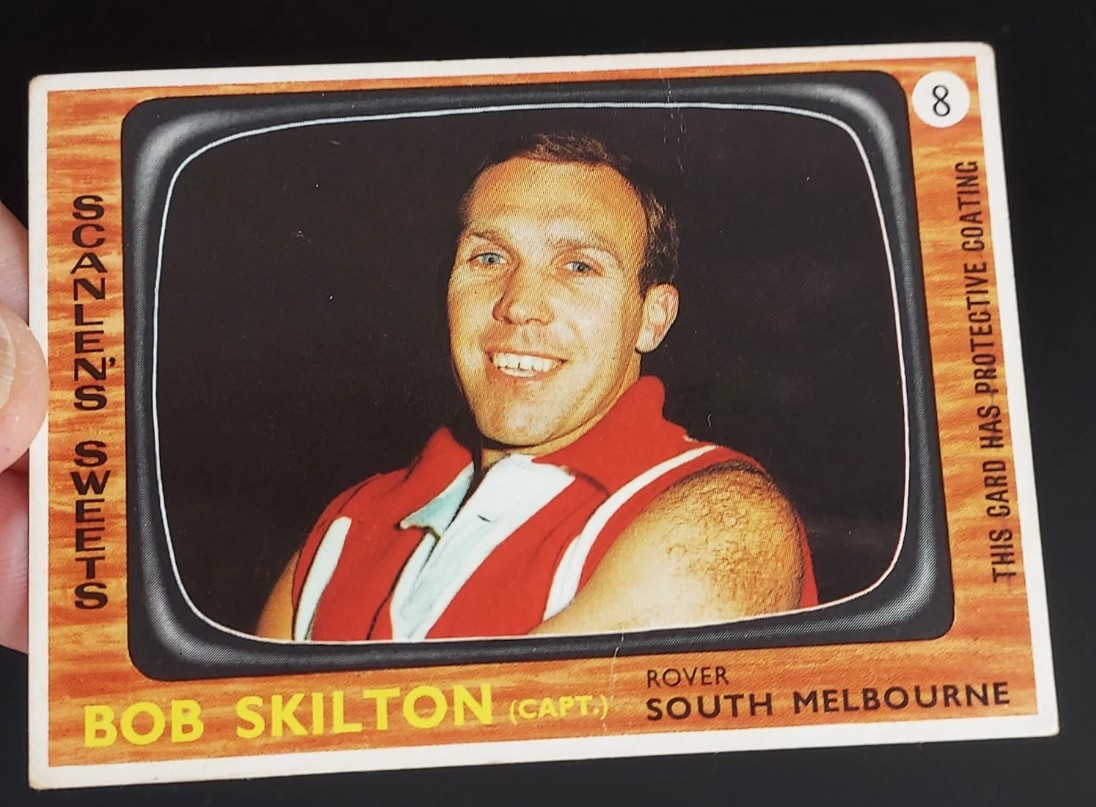
His father had insisted he kick with both feet, and Skilton developed this skill by spending hours kicking a ball against a wall, collecting the rebound and repeating with the other foot. It was impossible to say whether he was right or left-footed – his left gave greater accuracy, his right greater distance. He had arguably the most accurate stab kick in the game.
The Accolades: Three Times Counted, Never Equalled in His Era
The numbers are staggering. Skilton is one of only four players in history to win the Brownlow Medal three times — in 1959 (sharing the count with Verdun Howell), 1963, and 1968. That puts him in exclusive company alongside Haydn Bunton, Dick Reynolds, and Ian Stewart – names that belong on any shortlist of the game’s immortals.
But then came the verdict that transcended statistics. Jack Dyer rated Skilton as better than Haydn Bunton and equal to Dick Reynolds — an assessment that carries enormous weight when you consider those two men are themselves regarded as all-time greats who each won three Brownlows of their own. To be placed above one and alongside the other is about as emphatic an endorsement as a footballer can receive.
The individual honours kept mounting up. Skilton won nine Swans best and fairest awards — in 1958–59, 1961–65, and 1967–68 — and also took out the club’s goalkicking award three times. He represented Victoria in 25 state games, captaining the side twice, and over his 237-game career booted 412 goals — a remarkable return for a rover operating in tough conditions with a struggling team around him.
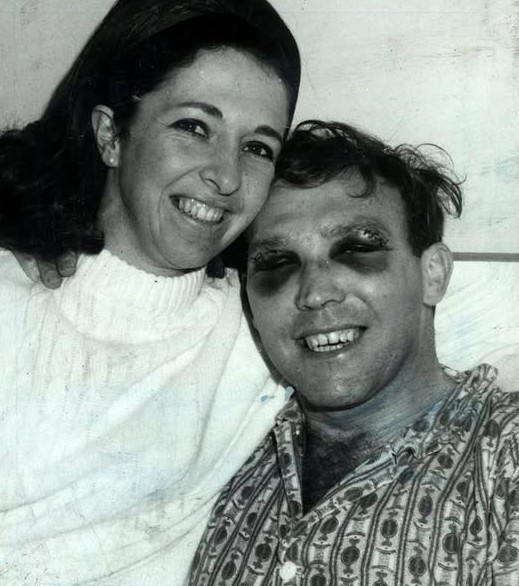
He did all of this while absorbing extraordinary punishment. Over his 16-year career he suffered concussion, a broken nose four times, a broken wrist three times, and twelve black eyes. His face became something of a badge of honour. It was his appearance on the front page of The Sun News-Pictorial in 1968 — battered but unbowed after fractures to both cheekbones caused by collisions in successive weeks — that earned him the Douglas Wilkie Medal.
A Career Without a Premiership – and the One Final That Meant Everything
If there is a shadow over Skilton’s legacy, it belongs not to him but to the club he served. It was the events of the 1970 season that he holds dearest. After missing the entire 1969 season with an Achilles tendon injury, Skilton returned under coach Norm Smith and helped South Melbourne end a 25-year finals drought.
He was 31, playing his 218th league match, when he finally broke through a banner at a final. “I felt 10 feet tall,” he said. “What must a player feel like in a Grand Final?” Sadly, he never found out. The Swans lost the semi-final to St Kilda, and Skilton never played in September again. Sydney Swans
For the rest of his life he maintained that he would swap his three Brownlow Medals for one premiership. “When it’s all said and done, you’re playing a team sport and there’s nothing like team success,” he said.
The Legacy: Named Among the Game’s Greatest
After his playing days, Skilton served as captain-coach of South Melbourne, then coached Melbourne from 1974 to 1977. In retirement, the honours kept coming. He was selected as the first-choice rover in the AFL Team of the Century in 1996 – ahead of Leigh Matthews and Haydn Bunton, who were placed in forward pockets, and Dick Reynolds on the half-forward flank.
He was named captain of the Sydney Swans Team of the Century and inducted as a Legend into both the AFL Hall of Fame and the Sydney Swans Hall of Fame. The Swans’ best and fairest award now bears his name. And in September 2023, Skilton was elevated to Legend status in the Sport Australia Hall of Fame – only the fourth AFL player ever to receive the honour.
The inscription on his bronze sculpture at Lake Oval puts it plainly: Brilliant. Resilient. Courageous. Scrupulously fair.
For a man who once tried to play for a different club altogether, Bob Skilton ended up belonging to the ages.